 Library of Congress
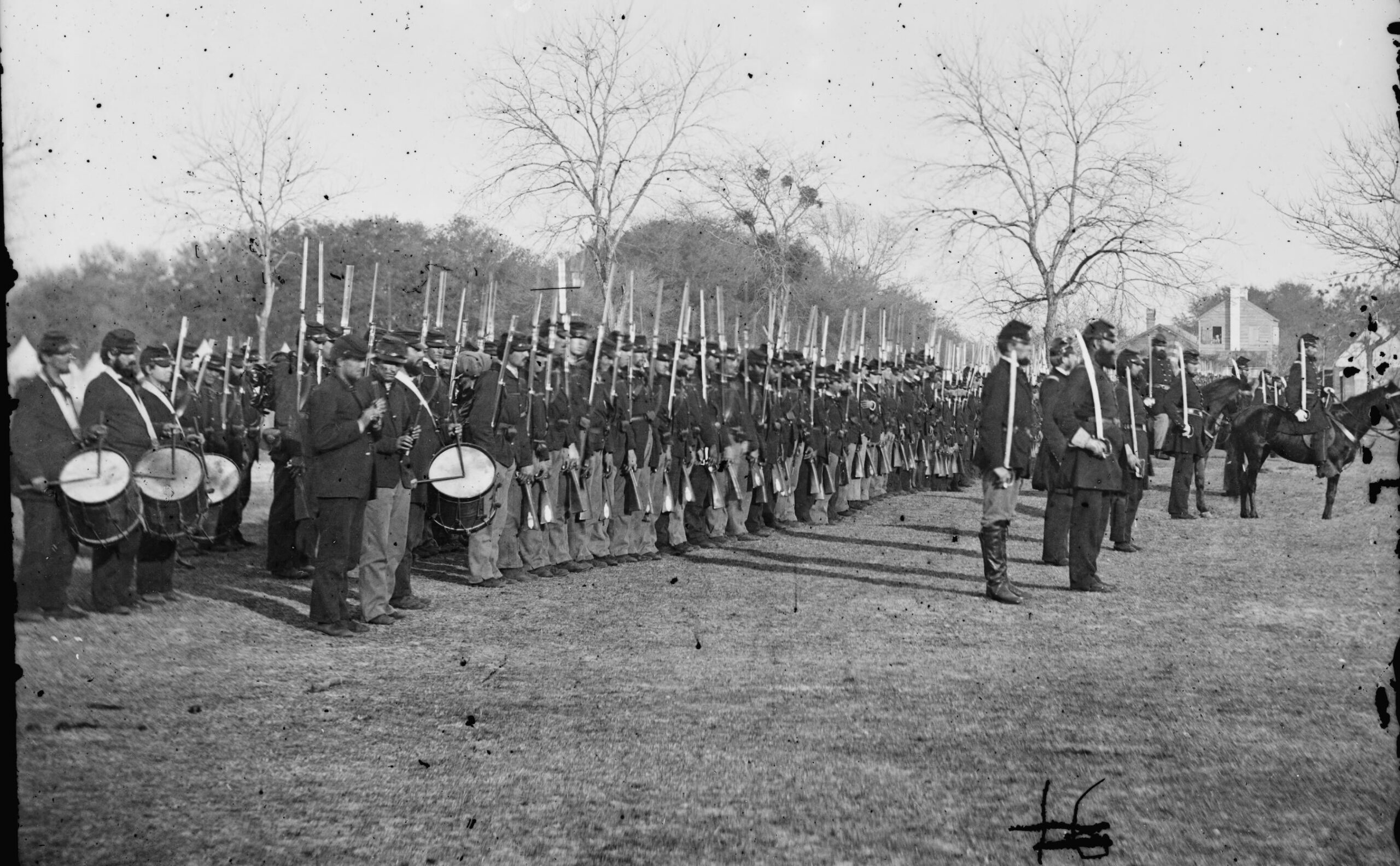
The 50th Pennsylvania Infantry pose in formation in February 1862.
In the Voices department of our Summer 2026 issue we highlighted quotes by Union and Confederate soldiers about their thoughts and feelings when on the verge of entering battle. Unfortunately, we didn’t have room to include all that we found. Below are those that just missed the cut.
“Our regiment was in advance. General Custer rode up, with his band playing ‘Hail Columbia,’ ‘Star Spangled Banner,’ and ‘Rally Round the Flag, Boys,’ and then the bugle sounded the charge.”
—E.G. Mash, 15th New York Cavalry, on the moments before his regiment charged the enemy during the Appomattox Campaign, in a letter to his aunt, April 14, 1865
“The morning … dawned gloomily for the last time on so many brave spirits.”
—Charles Maxwell, 3rd Maine Infantry, in his account of the second day’s fighting at Gettysburg, in a letter home, July 25, 1863
“[I]t struck me that mischief was brewing…. It was not long before a company of the skirmishers came in on our left, all much excited, huddled together in a heap: they were much scared, and looked as if they had seen a ghost.”
—Alfred Davenport, 5th New York Infantry, on the moments before the regiment bore the brunt of James Longstreet’s flank attack at the Battle of Second Bull Run, in a letter to his father, September 3, 1862.
“Every eye was now fixed on the strange vessel, with breathless silence we awaited, expecting each moment an engagement would commence, about the result of which we could not but feel a painful solicitude.”
—Roland Greene Mitchell, among a group of civilians watching the movements of the ironclad warships CSS Virginia at the outset of the Battle of Hampton Roads, in a letter dated March 11th, 1862. USS Monitor would join the fight the following day.
“Ammunition was given out, 30 or 40 rounds to the man, guns examined, the Surgeon’s wagon for dead and wounded drawn up, bandages, lint, surgical instruments, &c., ready for use, were in full view, and off we started.”
—A Confederate soldier on the runup to an expected encounter with the enemy (which did not occur) near Winchester, Virginia, in a letter to an Atlanta newspaper, June 29, 1861
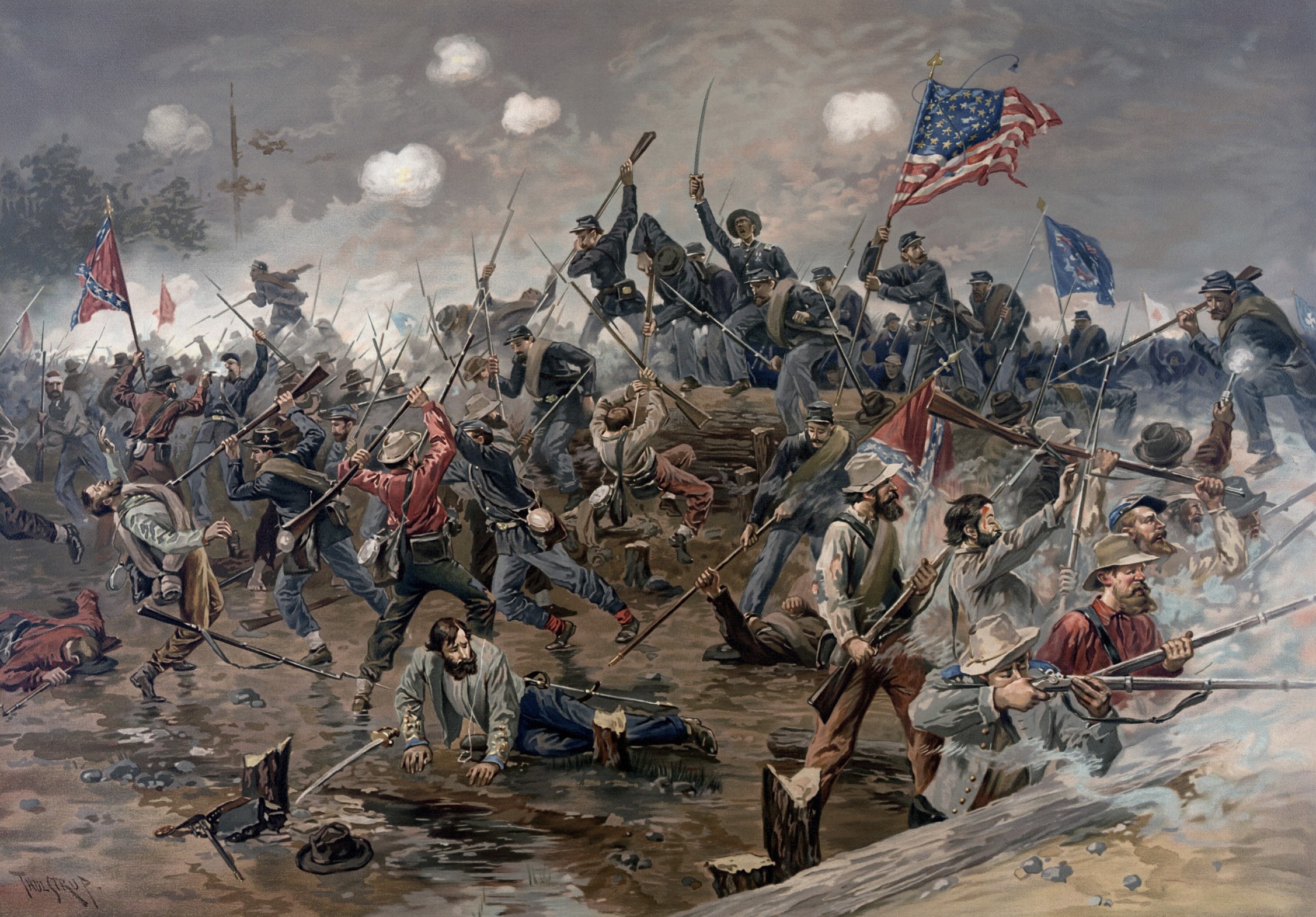
“[T]he whole field is covered with troops, closed en masse … surely this must mean something. Ah, we have not long to wait. There they go. It is a grand charge…. [N]ow it is our turn; steady boys, keep cool; forward now, remember who you are; double-quick, steady.”
—Union soldier J.R. Pillings, on the initial stage of the Battle of Spotsylvania Court House, in a letter home, June 10, 1864
 Library of Congress
“Battle of Spotsylvania” by Thure de Thulstrup
“Yesterday everything was remarkably calm, not a gun fired in hearing, but just at night orders to have the wagons in readiness to move immediately; also, the troops in arms, and to await orders. Pulses began to beat quicker, and every one said ‘to-morrow the great battle will be—surely it will.’ So everything was got ready instantly, and with an absolute fever heat coursing through every vein, the men talked over and over the coming events, waiting and watching for the expected orders.”
—A soldier in the 2nd Georgia Infantry, in a letter written in camp near Richmond to his hometown newspaper, May 29, 1861. He added that the orders “came not.”
“The troops … filed off the road to some woods on a high hill commanding a view of the valley beyond for several miles…. In the distance could be seen a Yankee force of cavalry on picket, and still further on were visible moving bodies of men, and wagons rolling up dense clouds of dust. Our artillery were winding along the base of the mountains, through thickets and along the little ravines, for the purpose of getting into position. Long lines of slow marching infantry were following different directions, their bright muskets gleaming in the light of the evening’s sun, while now and then a solitary horseman might be seen dashing along the valley now so quiet and peaceful, but soon to be the scene of fearful noise, confusion, pain and death.”
—A soldier in the 14th Georgia Infantry, on observing the opposing armies’ movements before the Battle of Cedar Mountain, in a letter to an Atlanta newspaper published on August 26, 1862
“[E]arly in the morning, word was sent round that we would charge the breastworks…. You may imagine each man’s feelings, about that time. We all felt that we could take the works; yet we knew that ‘many brave boys would fall’ before we could drive the enemy from his fortifications, but almost all felt that it would be some one else besides himself who would fall.”
—Stephen A. Rollins, 95th Illinois Infantry, on the moments before he and his comrades were ordered to charge the Confederate works at Vicksburg, in a letter to his parents, July 20, 1863
 Dale B/Findagrave
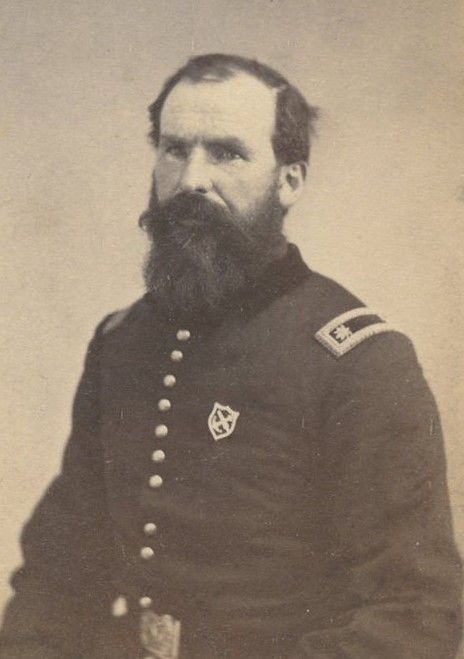
Jacob Roemer
“How can I describe what I felt that night, knowing what was before us? What a responsibility rested upon me! I felt that the lives of my men were in my hands and that I must give account of them. All night long the minutes seemed like hours. I thought of everything—of my family at home and of the possibility that I might not see the morrow’s night. If I should not, what then? The thought was agonizing. It seemed as though I could not endure it, but endure I must, whatever my feelings might be, for I knew the enemy were right in front of us and we had been told to hold ourselves in readiness for any emergency that might arise during the night.”
—New York artillery officer Jacob Roemer, on his state of mind before the Battle of Cedar Mountain, in his memoir of the war
“On our side all was joyful; the boys were chatting about home and their sweethearts, &c.”
—C.W. Anderson, 12th Georgia Infantry, on reaction in his brigade after receiving orders to advance during the Battle of Cedar Run, in a letter to a Georgia newspaper, August 14, 1862
“Not a word was spoken, for we knew not how soon the tables might be turned, and the biter become the bitten.”
—Rowland Hall, 3rd New York Cavalry, on a lull during the December 1862 Battle of Kinston, North Carolina, in an undated letter. Hall and his comrades has just overwhelmed several Confederate picket posts and were preparing to charge the main enemy position.
“By 9 a.m. … we were … within sound of battle, to which we hurried as fast as our sore feet and worn out condition would allow us. We soon saw evidences of the bloody work of death progressing, for the road was lined by the wounded in ambulances, on litters, and limping along, some supported by friends, and others leaning on sticks.”
—V.A.S. Parks, 17th Georgia Infantry, recounting his regiment’s approach to the battlefield at Antietam, in a letter to the Savannah Republican, September 22, 1862
“[T]he real test comes before the battle—in the rear line, under fire, waiting. The true perspective of danger is observed and comprehended by the man attached to the edge of battle—not in it, but near enough to feel its fierce pulsations and get an occasional shock of its power.”
—Abner R. Small, 16th Maine Infantry, in his memoir of the war
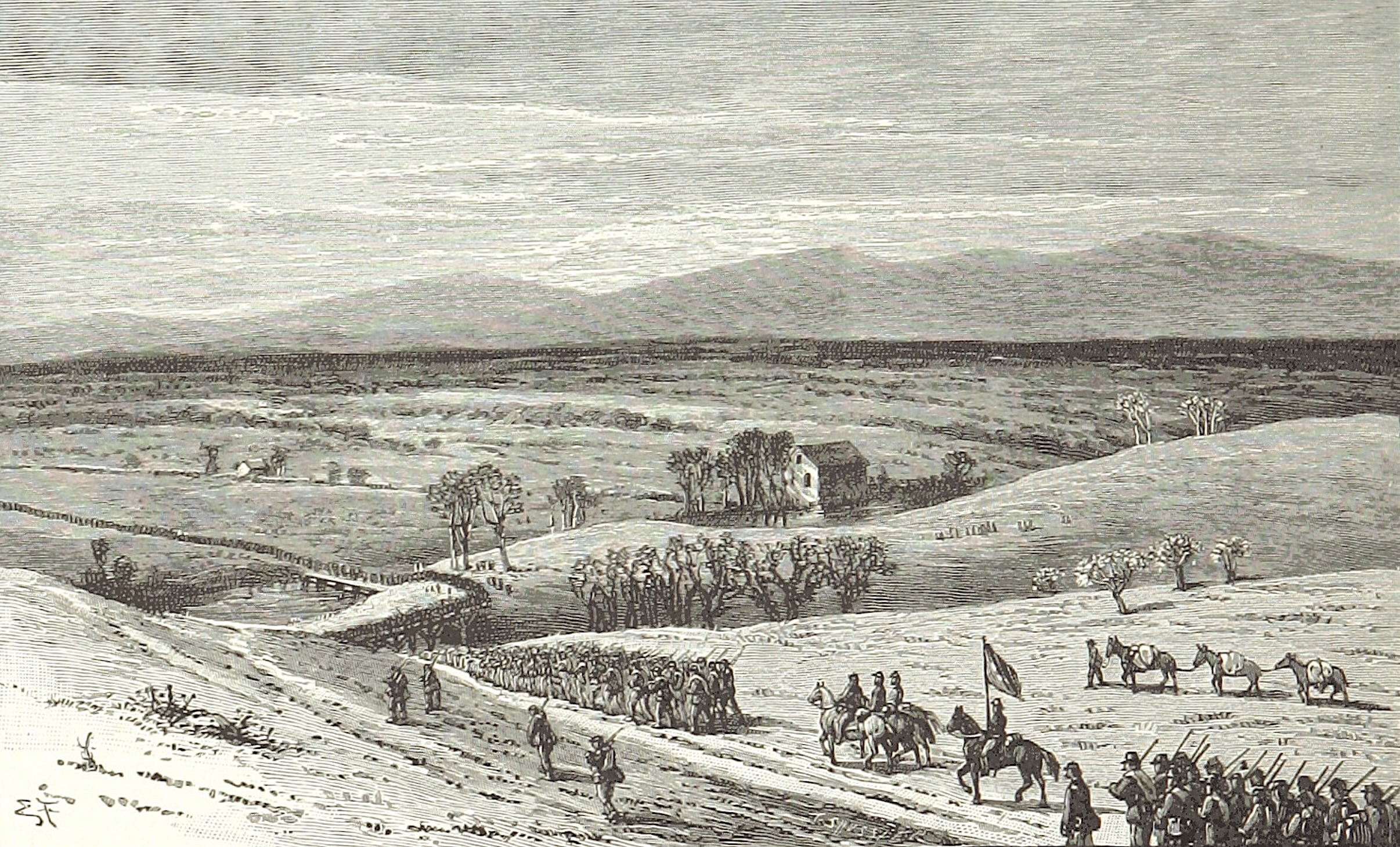
“It was a pleasant morning. The birds were warbling their sweetest notes in welcome of the bidding spring. The rain had ceased and the dark clouds had disappeared from the horizon—all was lovely and bright, and I asked myself if such a lovely day was soon to witness scenes of death and carnage.”
—Confederate soldier M.D. Martin, on advancing toward Chancellorsville days before the battle there, in a letter to his parents, May 8, 1863
 Battles of Leaders of the Civil War (1887)
This Edwin Forbes illustration depicts Union soldiers on the march to Chancellorsville.
“Doctor, please tell me what is the matter with my heart. It beats so it seems as if it would come through my chest wall.”
—Union surgeon Seth C. Gordon, on an encounter he had with a Union soldier who was “pale and had evidently lost all strength,” at the start of the Battle of Cane River, in his reminiscences of the war
“Oh! It is an awful sight a host arming for battle…. The packing of knapsacks, the examination of cartridges, the ringing of the rammers in the muskets to see that all is ready for the dread conflict, the orders of the officers, the hasty couriers and aides riding their horses to the utmost speed, the forming of ranks to right face, and forward march!!! All tell of the dead work to come.”
—Daniel Bond, 1st Minnesota Infantry, in his reminiscences of the war
“[T]he sun rose beautiful and bright—all nature seemed lit up with unusual brightness and splendor as if in mockery of the awful carnage which would soon ensue….”
—John H. Bogart, 61st Virginia Infantry, in a letter to his parents detailing his participation in the Battle of Chancellorsville, May 8, 1863
“Everything became terrifically quiet. For the quiet that precedes a great battle has something of the terrible in it.”
—Thomas Francis Galwey, 8th Ohio Infantry, on the scene in camp the night before the Battle of Antietam, in his memoirs
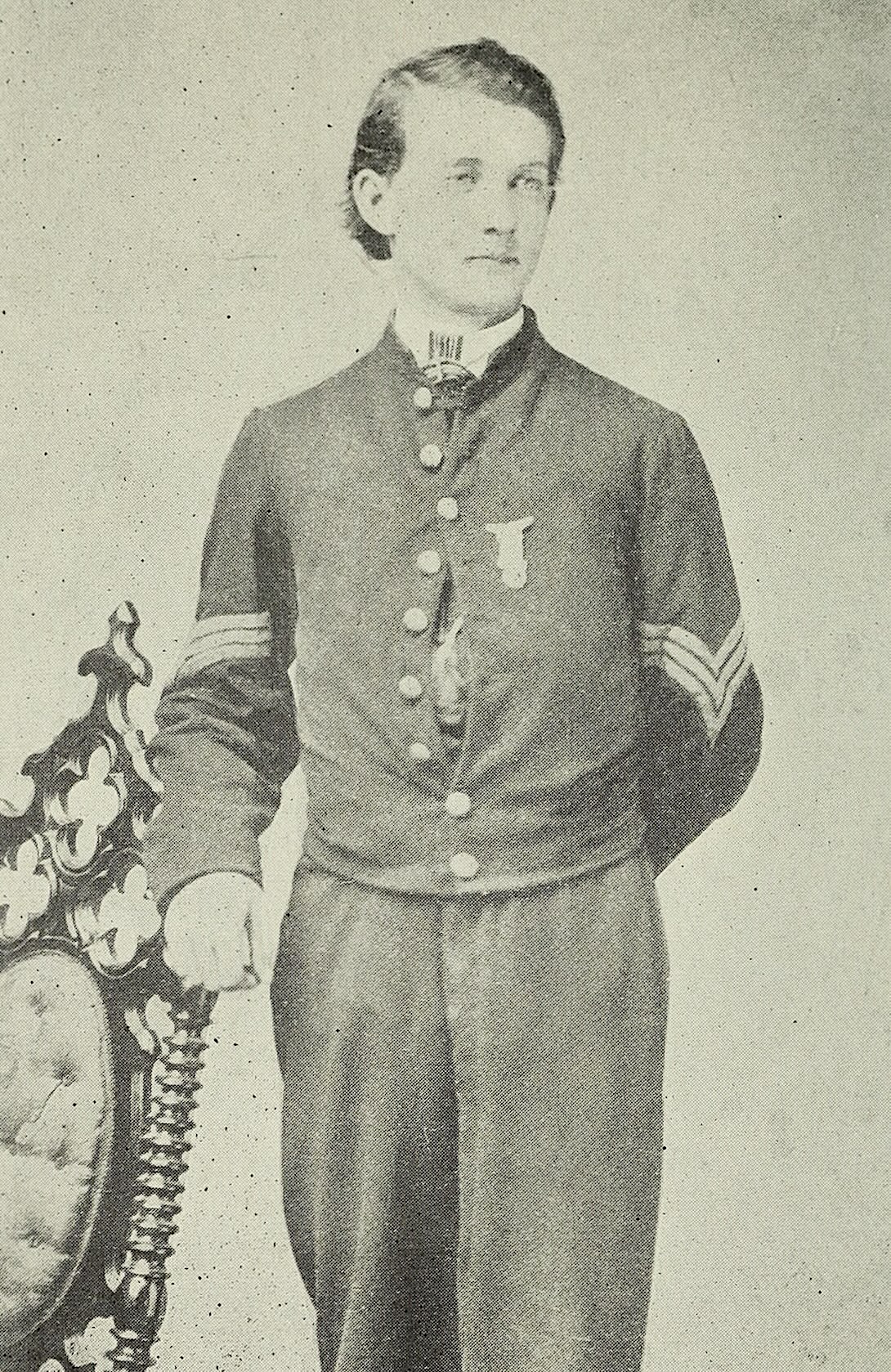 Life of Osborn H. Oldroyd (1927)
Osborn H. Oldroyd
“The instructions left with the keepsakes were varied. For instance, ‘This watch I want you to send to my father if I never return’ — ‘I am going to Vicksburg, and if I do not get back just send these little trifles home, will you?’ — proper addresses for the sending of the articles being left with them. Not a bit of sadness or fear appears in the talk or faces of the boys, but they thought it timely and proper to dispose of what they had accordingly.”
—Osborn H. Oldroyd, 20th Ohio Infantry, on his comrades’ behavior before receiving an expected order to attack the Confederate works at Vicksburg, in his diary, May 22, 1863
“A feeling of horror, dread and fear came over me—I was faint, and only too glad to sit down and found a place against a tree. I questioned myself as to whether I was faint from fear, or from not having eaten anything so far that morning. I reached into my haversack, took a biscuit, attempted to eat it, but could not swallow the first mouthful. I took a drink of water from my canteen—but to no purpose. Then the conviction came to me that surely I was a coward, and what was I to do? 1 shivered as with ague. I got onto my feet, but there was no escape—I must face the danger.”
—Elbridge J. Copp, 3rd New Hampshire Infantry, on his state of mind before entering the Battle of Secessionville, in his reminiscences of the war
“It is a feeling that cannot be described that takes possession of one, when the battle is raging and you know that every moment some of your fellow soldiers is dying. The most wicked man in the army cannot help praying to the God of battle that He will shield and protect our soldiers. The same restless, feverish feeling that one experiences before going into battle is felt. The breath comes thick and short, and it is only when there is a momentary lull in the fearful storm that you draw a long breath. And no matter what the danger, you feel a desire to rush to their assistance. While you watch the progress of the conflict you become weary, and great drops of perspiration will stand upon your forehead.”
—Edmund DeWitt Patterson, 9th Alabama Infantry, on waiting to be deployed at the Battle of Gaines’ Mill, in his diary, May 6, 1862
“[M]y face felt as if it were marbleized; sharp twinges ran up and down my whole body, and I’ll bet that I was the picture of a coward. I was not the only one. I looked them all over, every one looked just as I felt. One man who stood near me, I know, was more frightened than I, for he was so frightened he smelt badly.”
—George Ulmer, a drummer boy in the 8th Maine Infantry, on the moments before the transport ferrying him and other Union soldiers landed to reinforce Fort Powhatan on the James River, then under attack by Confederates, in his memoirs
“There is something sad and melancholy in the preparation for Battle. To see so many healthy men prepareing for the worst by disposing of their property by will—to see the surgeon sharping his instruments & whetting his saw … men engaged in carding up & prepareing lint to stop the flow of human blood.”
—Confederate soldier T.W. Montfort, in a letter to his wife, April 5, 1862
“[W]hen … he realizes that he must go to the front … [h]is soul becomes a theater, where the two star actors, HOPE and FEAR, supported by Imagination, Apprehension, Patriotism, Courage, Doubt, Resolution, Ambition, and a host of supernumeraries, rehearse the coming battles. Fierce and doubtful is the fight, even on that mimic stage; but Hope is always victorious in the last act, and is the ever encored favorite!”
—Theodore Vaill, 2nd Connecticut Heavy Artillery, on his regiment receiving word it was being sent to fight in the Overland Campaign, in his history of the regiment
Sources
Soldiers’ Letters, from Camp, Battlefield and Prison (1865); William B. Styple, ed., Writing & Fighting from the Army of Northern Virginia (2003); Reminiscences of the War of the Rebellion, 1861–1865 (1897); The Road to Richmond (1939); “Reminiscences of the Civil War from a Surgeon’s Point of View,” War Papers Vol. 1 (1898); Earl J. Hess, The Union Soldier in Battle (1997); The Valiant Hours (1961) ; A Soldier’s Story of the Siege of Vicksburg (1885); Reminiscences of the War of the Rebellion, 1861–1865 (1911); Yankee Rebel (1966); Adventures and Reminiscences of a Volunteer (1892); Bell Irvin Wiley, The Life of Johnny Reb (1943); History of the Second Connecticut Volunteer Heavy Artillery (1868).