Historian Brooks D. Simpson weighs in on Ulysses S. Grant, from assessing his best and worst military moments to addressing rumors of his wartime drinking.
Transcript
Terry Johnston: Brooks, thanks very much for joining me today. We have two questions for you, both of them relating to Ulysses S. Grant. The first, submitted anonymously, is: “What were Grant’s best and worst moments as a commander during the Civil War?” Let’s start with his best moment.
 Library of Congress
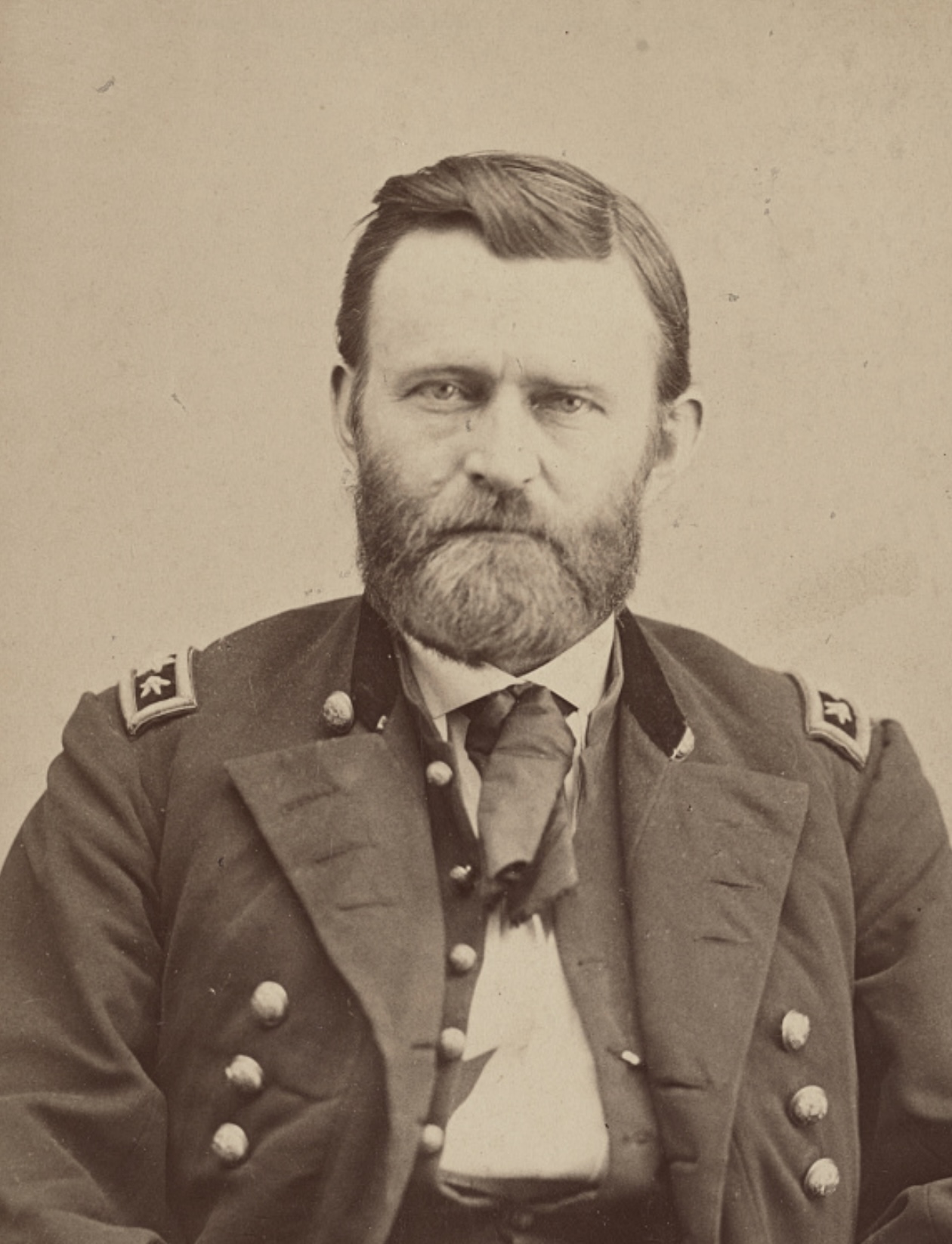
Ulysses S. Grant
Brooks Simpson: Okay. I think we can divide those further into the best professional moments and the best personal moments, because they’re somewhat different. For the best professional moments in terms of his performance as a commander, probably the three surrenders. The surrender at Fort Donelson in February 1862. That’s where he gets his nickname of “Unconditional Surrender” Grant. This is a moment that Grant’s been looking for, to show that he could command and it couldn’t be more successful than he had imagined. The second: the surrender of Vicksburg in July 1863 after months of struggle of trying to get at the Citadel on the Mississippi. He finally has a campaign that astonishes the world in terms of its rapid movement, its skilled use of logistics, and his willingness to take advantage of a divided foe. That’s a big triumph. That triumph, professionally and personally, means that Grant’s position thereafter is secure. Before Vicksburg, his position as a Union commander was not secure, there were doubts about his generalship back in Washington and elsewhere. Afterwards, he’s pretty much invulnerable to the kind of criticism that would result in the removal of a lesser commander.
The third triumph, of course, the surrender at Appomattox. We see that in terms of the spring of 1865, but from Grant’s view, that’s the culmination of 11 months of campaigning, starting in May 1864 in central Virginia, the Wilderness and Spotsylvania, this endless pursuit and engagement of Robert E. Lee and forcing Lee to surrender the initiative to him. Finally, he’s got Lee where he wants him. The cumulative impact of that 11 months of campaigning, both in Virginia and elsewhere, finally manifests itself in the surrender of the Confederacy’s most famous field army and its most able general.
So those are three major professional accomplishments. Those are the three big surrenders of the American Civil War in terms of the United States securing the surrender of Confederate forces. And they last for quite some time as the three greatest captures made by the United States Army, clearly eclipsing Yorktown and Saratoga during the American Revolution.
Terry Johnston: So that’s professional. What about the personal, as you were alluding to earlier?
Brooks Simpson: I think the personal moment comes after Vicksburg when he wins promotion to major general in the Regular Army. Because Grant has always looked for a job he could hold and he could keep. Yes, he was a brigadier general and then a major general in the United States volunteer army. But that meant that with the end of the war, he would go back to civilian life. He’d go back to that general store in Galena, Illinois, working for his father and with his brothers. He didn’t want to do that. He lost one brother already, Simpson, during the war. He didn’t really care very much for the other brother, Orville. And he really didn’t want to continue to labor under his father’s watchful gaze. And so getting to become a major general in the Regular Army for Grant meant that after the war, he would continue to hold that rank. He had a job. And I don’t think we understand that Grant had struggled after his resignation from the army in 1854 with getting a job that he could hold and where he showed evident skill. He had tried enough. Sometimes his failures were not his own fault. But, finally, he has the kind of job security that allows him, for example, to look for a home for Julia and his four children. Before this time, unless Julia and maybe some of the children were at headquarters with him, otherwise they were living from one house to another, either her father before the war, or his father or his sister. And these were not always great relationships, to be kind.
And so it was really something for all of a sudden he could say, “I have a job. I can hold this job until I retire.” And in fact, it made him a little nervous when he wins the presidency in 1868 because he had to resign from the army. He couldn’t put his commission on the shelf for four or eight years. And at that time, presidents didn’t get a pension. So when his presidency ended—he’s the youngest man at that point elected president of the United States—what are you going to do in your early fifties with no job, no pension, no means to provide for yourself? That’s actually kind of a challenge for him.
So getting that rank of major general in the Regular Army, that’s something, even later on he said, “That’s what I wanted. I thought I would get an assignment to the West Coast,” but of course, events go into a different direction. But that’s the kind of job security, the kind of triumph that he had been seeking for years. And he finally got it.
Terry Johnston: And I suppose not just job security, but as you were saying, financial security as well to a certain extent.
Brooks Simpson: Yeah. This is a man who had known poverty, who had known bad luck, who was too trusting of others, who was really not fit for the business world, in part because he lacked, frankly, the conniving, shrewdness of his father and some people around him, including brother Orville. He wasn’t good at business, not because he was incompetent, but because he was too honest and trusting. That’s going to get him in trouble later on again in other pursuits, notably the presidency.
Terry Johnston: And that promotion, just so I’m clear, that happens right in the wake of the fall of Vicksburg, doesn’t it, when he gets promoted to major general in the Regular Army?
 Library of Congress
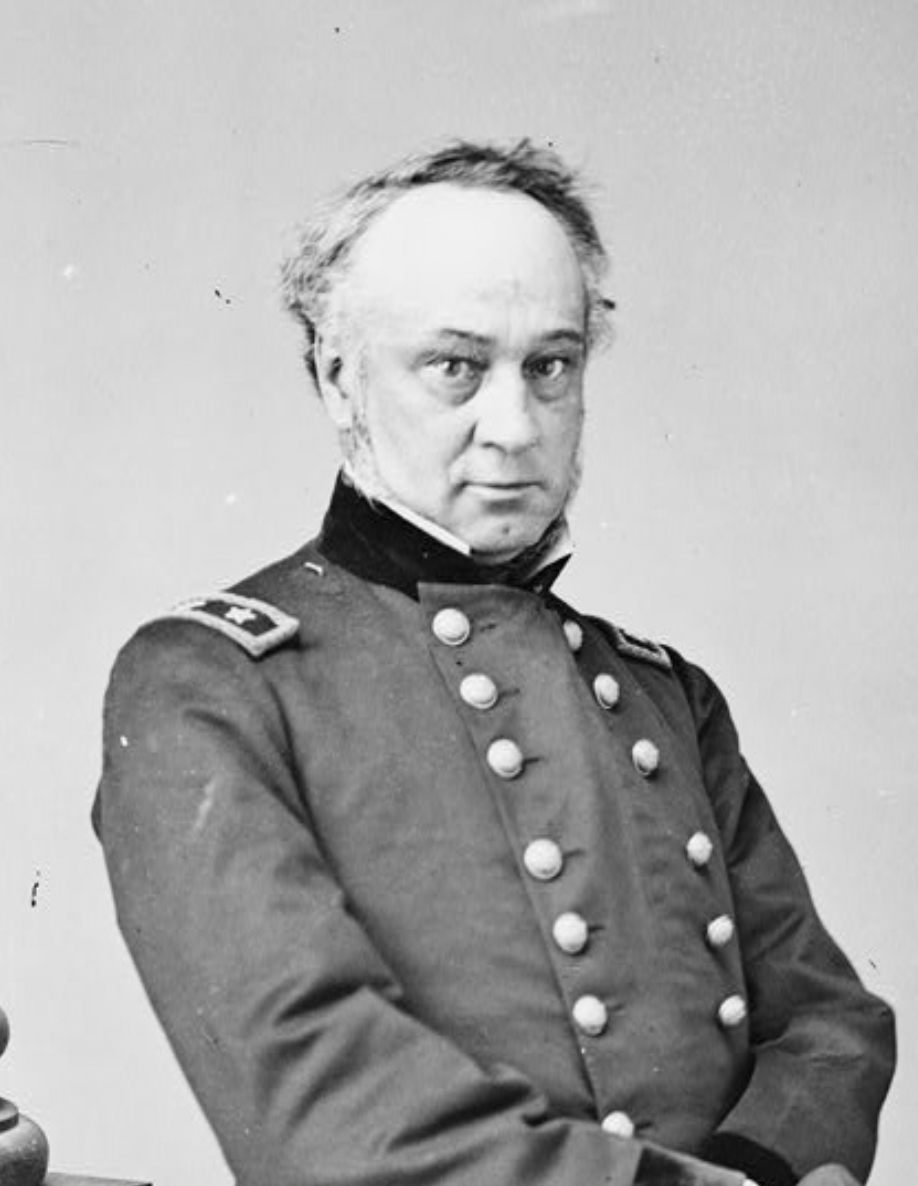
Henry Halleck
Brooks Simpson: Yes. And the roots of that are Henry Halleck, who’s the general-in-chief of the armies of the United States in 1863, actually sends a letter and says, “I’ve got a commission here for major general in the Regular Army. Who wants it?” And the three people he’s addressing are Joseph Hooker, who’s commander of the Army of Potomac at that time, William S. Rosecrans, who’s commander of the Army of the Cumberland at that time, and Grant. And it’s interesting that Hooker doesn’t say very much about this because he’s too preoccupied with what he believes to be his impending destruction of Robert E. Lee. And, of course, that ends with the Chancellorsville Campaign. And then Hooker is removed during what we now know as the Gettysburg Campaign, Lee’s invasion of Pennsylvania in June 1863. Rosecrans actually becomes rather dismissive of the offer and expresses how dismissive he is about it, which probably is a reflection of Rosecrans’ inability to watch his own tongue and his ability to offend his superiors and subordinates alike. Grant doesn’t say anything about this. He knows, in fact, that there are people in Washington and people in his own command, like John McClernand, who are spreading whispers about his ability as a commander and his personal conduct. Grant just goes out and does the job, lets the chips fall whither they may, and is the one who in the end gets that commission.
Terry Johnston: Well, you mentioned Halleck and I have a feeling we’ll be getting back to him when we start to discuss the worst moments of Grant’s military career during the Civil War. But before we get there, I wonder, moving back to those three victories: Donelson, Vicksburg, Appomattox. Besides the fact that Grant forced the surrender of entire armies at these battles, are there any decisions he made at them that stand out to you as particularly inspired?
Brooks Simpson: Well, certainly, for example, at Fort Donelson, when he comes upon his army in disarray, the Confederates have attacked his right flank. There’s chaos and confusion, and some disillusionment among some of his subordinates. Grant grasps the situation in a moment. He understands that the Confederate offensive is designed to open an escape route out of Fort Donelson, because he checks a haversack of a Confederate and sees that’s filled with food. He says, “They’re trying to get out of here.” And so he rallies the troops on the right, but he also immediately launches attack on the left under the command of Charles F. Smith, his old commandant from West Point days. And so this rapid reaction. A lot of generalship is how you improvise in response to circumstances that come upon you. And certainly at Donelson, that’s what Grant does. Other generals lose their cool. Grant tended to retain his.
As far as Vicksburg goes, Grant had tried all sorts of ways to get on the east side of the Mississippi River, but from January to the end of April 1863, this was a really challenging situation. There’s pressure from Washington. It’s winter, so you have to wait for spring and the levees to dry to provide the kind of roadways he needs to move. From the beginning, he had said if I could do what I ended up doing, if I could have done that earlier, I would have. But the weather conditions did not facilitate that kind of movement until mid-April or so. And so he had to keep busy, in part for the health of his command and in part just to see what might turn up. And he didn’t want to just sit there. And he didn’t want to move back to Memphis, which is what his subordinate William T. Sherman suggested. He said, “That’s going to like a retreat and we’re going to be in trouble as a result.”
So he’s dealing with a lot of things there. And then when he cuts across the Mississippi, south of Vicksburg, and then goes in the interior, defeats multiple Confederate armies under Joe Johnson and John Pemberton, people are just astonished by this. This is the kind of stuff that we usually associate with a Stonewall Jackson, but with a much larger force. And it’s an ideal example of the operational art, the mastery of logistics, the cool head, the ability to respond to changing circumstances. This is Grant at his best. And it’s done with an army that’s basically about the same size as his Confederate counterparts. So the idea that Grant was a butcher who won by superior numbers, the Vicksburg Campaign puts that canard to rest.
Now, Appomattox, I think, people underappreciate the difficulty of mounting a pursuit of a defeated force after a victory. After U.S. forces oust the Confederates from Richmond and Petersburg, catching up to Lee doesn’t mean following him. It means getting ahead of him. It means wearing his army down. It means taking advantage of what attrition has already taken place. Not necessarily in terms of casualties, dead and wounded, but just in terms of the morale and the logistical supply of the Confederate force. To get ahead of Lee, corner him, to surround him with an army that was not always known for its alacrity of movement, is quite a moment. And there aren’t successful pursuits during the American Civil War, in part because you have to commence the pursuit even as you’re winning. You can’t wait to claim total victory and then pursue. The people you’re pursuing will get away. It’s the act of pursuit of Lee which is astonishing. And I think we underestimate what Grant achieved during the Appomattox Campaign because, in fact, Lee’s army just dissolves during this campaign. It’s a much larger army at the beginning than at the end. And now the men who surrendered, not all of them were carrying their weapons anymore. It says something about the demoralization of Lee’s army at that time. And Grant was able to finally deliver the finishing blow to the Army of Northern Virginia.
Terry Johnston: Alright, well, so three decisive victories and that promotion to major general we’re marking down as Grant’s best moments. Let’s move on to the worst, then. What was his worst moment or moments?
Brooks Simpson: Okay. In terms of his professional performance as a general, I would say the disaster at the Crater at Petersburg. That he saw that there was an opportunity to break that siege in the summer of 1864 that failed miserably. And Grant at this time is dealing with so many other problems in the Army of the Potomac and the Army of the James, here’s an opportunity to break through. And once again, coordination fails. His subordinates fail. He probably did not supervise this as carefully as he ought to have given that he already knew about some of the flaws in the command structure and in the individuals that commanded these armies. But this was this chance to break that siege quickly, that decisive battle that he did want to have if opportunity beckoned. He didn’t seek it every time, but if it was there, he would take it and have such an innovative approach, fall flat on its face. He meets Abraham Lincoln the next day, having to confess that this surprise blow in which he placed so much had amounted to so little and was a bloody setback. So I think that, professionally, is his low moment of, we had victory within our grasp and we let it slip through our fingers.
In terms of his personal lows, here we go back to Henry Halleck. It’s Grant’s two displacements from command. First after Fort Donelson, when Halleck is upset with Grant for not filing the correct paperwork in a timely fashion. And Halleck believes he needs to get Grant back under control and, touching on something we’re going to talk on later, he says, “Gee, I even think that Grant is drinking again. That must be what’s going on here.” To be displaced from command weeks after you’ve accepted the surrender of a Confederate garrison at Fort Donelson, what do you need to do to be successful? What do you need to do to earn people’s trust? Grant’s really crushed by this. He’s demoralized.
Same thing after Shiloh. Halleck comes down, reorganizes the armies gathered around Shiloh, forms basically a three-winged force of the Army of the Tennessee, what’s going to become the Army of the Cumberland, which was then called the Army of the Ohio, and other forces. He makes sure that he has army commanders, George Thomas, Don Carlos Buell, and John Pope. He puts Grant in a second-in-command position, and Grant realizes he has nothing to do in that position. And Halleck does not always treat him very well face to face. Grant actually starts seeking to have a transfer elsewhere. He’s had enough. And, in fact, so the story goes, he was preparing to go home for a while and told Sherman, “You know, I’m just in the way here. I can’t do anything.” And as luck has it, Lincoln was so enamored with Halleck that he brings Halleck east to become general-in-chief, and all of a sudden Grant is restored to a command position. But it was just by happenstance and circumstance that Grant was saved from being so demoralized, so disillusioned, feeling that he’d failed again at life. The United States almost lost probably its best general in the summer of 1862.
Terry Johnston: Well, it’s interesting because it does dovetail with one of his best moments in your mind, which is that promotion, and the security it gave him, to major general after Vicksburg. So, in the wake of Shiloh, being relegated to second in command by Halleck, how close does he truly come to hanging it up and leaving the army? And how important was Sherman in helping reverse that potential decision?
 Library of Congress
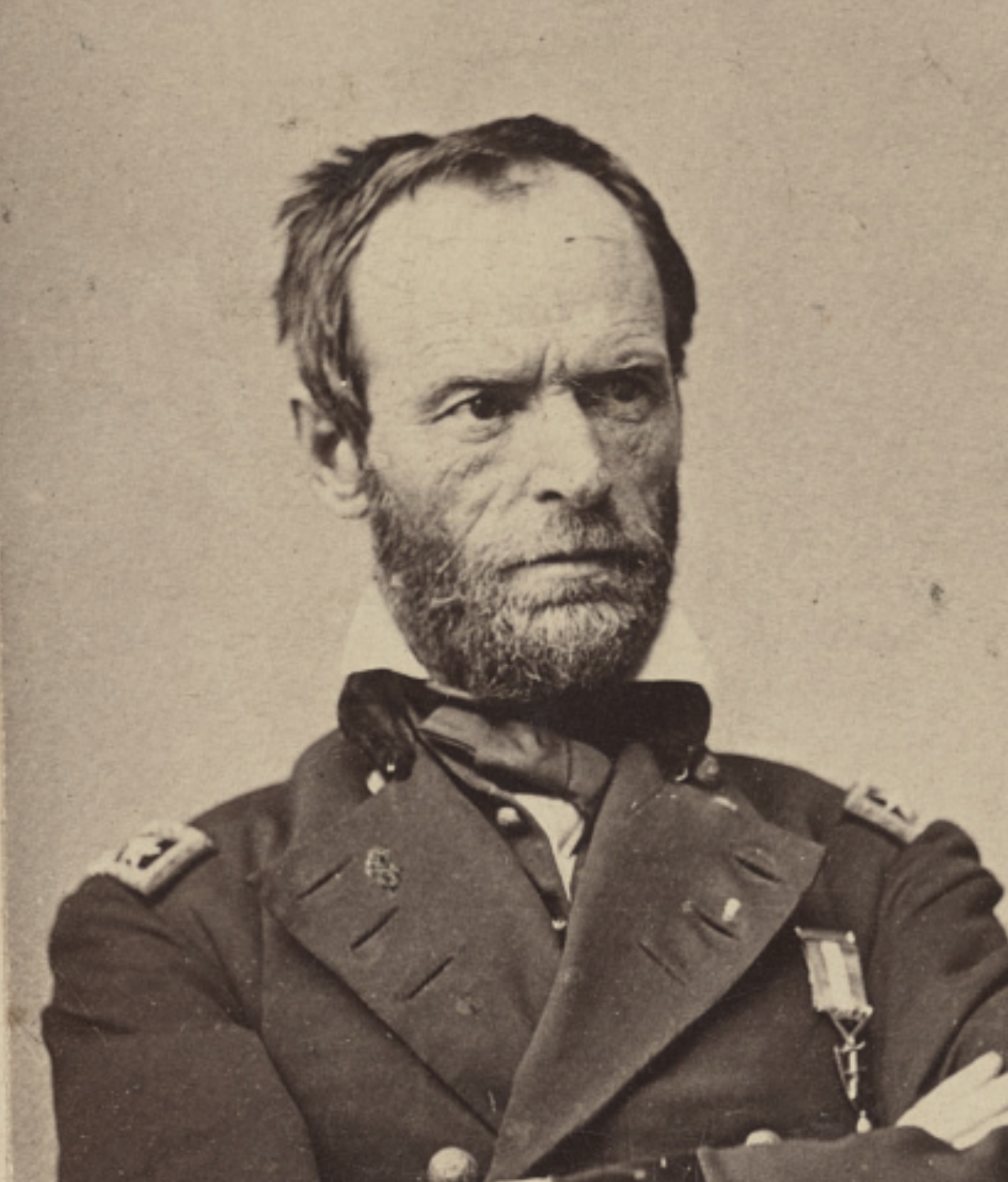
William T. Sherman
Brooks Simpson: Okay. There’s been a little debate, Terry, about how important this was. But the correspondence coming out of Grant’s headquarters is very clear that he’s interested in a transfer elsewhere. He wants to escape the situation. And he does seek to have a leave to take care of business, so to speak, but also to get out of Halleck’s army, at least for a while. So there are people looking around saying, what are we going to do next? Sherman really plays up his role in this. That’s where we get the story of Sherman talking him into staying with the army. There’s probably some truth to that. Sherman was a qualified, and I point this out carefully, a qualified supporter of Grant because Henry Halleck was still the star of the war at that time in Sherman’s mind. But I do think the idea of leaving, of casting about for alternatives, is weighing very much on Grant’s mind, along with the constant carping from Halleck, who is very good at criticizing others and not very good at taking responsibility himself.
Terry Johnston: Let me throw out a nominee for worse moment of my own and get your take on it. What about General Order No. 11, the so-called Jewish order that Grant issued in December 1862 when he was in charge of the Department of the Tennessee? Can you explain that some for our listeners? And do you agree that that ranks up somewhere among his worst moments?
Brooks Simpson: Oh, it ranks among his worst moments. I don’t think he felt it quite as deeply as the other moments I’ve outlined. It was a horrifically worded order that meant things that Grant clearly didn’t intend it to mean. He was told by Halleck later on that if he’d simply put the noun “peddlers” in there, it would’ve been acceptable. It’s the order to exile all people who are Jewish from his department. That’s simply ridiculous. And even Julia Grant would later on call it “that obnoxious order.” And Grant, it’s the only thing that Grant really kept on apologizing for, for the rest of his life. He’d be attacked on all kinds of grounds. Well, where he responded publicly was when criticism renewed over General Order No. 11 during the presidential campaign of 1868. Grant knew he had made a mistake and it was embarrassing and it was stupid. And all the people who tried to give explanations as to what motivated Grant to issue the order, that doesn’t really matter.
The fact is the order was bad. It was quickly remanded, canceled and withdrawn under pressure from President Lincoln. As it should have been. But Grant really shook that off after a while. The impact of that order on his career during the war is not nearly as important to him as its continuing legacy after the war when people bring it up as a sign of Grant’s antisemitism. I think that’s one of those cases where Grant did learn from his mistake and thought this was a stupid thing for him to have said and done. And for the rest of his life, he did all he could to make amends for.
Terry Johnston: Well, and going back to the actual reason he issued the order, he was trying to combat illicit cotton trading in his department. Wasn’t that at the root of his motivation for doing this?
Brooks Simpson: Yeah. Well, there are two things that go on at this time. One is, again, professional, one is personal. The professional part is that merchants who were Jewish in Cincinnati and Memphis had created trading networks before the war, in part because antisemitism among other Americans meant that they sought out fellow Jewish merchants to conduct trade. Once U.S. armies take over west Tennessee, those trading routes can resume. And so the trading routes are basically a manifestation of antisemitism and a reaction to them. So you have a lot of people moving cotton back and forth and making a lot of money on it. One of those people who wanted to be among those folks was Grant’s father, Jesse Root Grant, who always had an eye for the main chance. If you want to talk about relatives who wanted to make money off a successful individual, there are members of the Grant family that certainly fit, both blood members, married members, and various in-laws. It’s really ugly. And Jesse comes down and two of these merchants from Cincinnati are Jewish. And the argument is that Grant’s general order is basically some sort of knee jerk reaction to his father, that he is really striking back at his father.
Look, whether that’s true or not, there are orders that come out beforehand that suggest a tinge of antisemitism in the view of Jewish people in Grant’s command by Grant and by subordinates. And afterwards it’s more that I think he’s in hot water, and “boy, this is a dumb order, but if I worded it differently.” And that’s what he’s told by headquarters. “If you’d just worded it a little differently, it would’ve passed muster.” So I don’t think it’s until after the war that he begins to feel the full weight of what he had done and true remorse for that action.
Terry Johnston: Well, let’s move on to our second question, which is from Mike in Minnesota. And he asks, “How accurate were rumors of Grant’s wartime drinking?” Now, before we get to the rumors, can you sketch out what we know about Grant’s relationship with alcohol for our listeners?
 Library of Congress
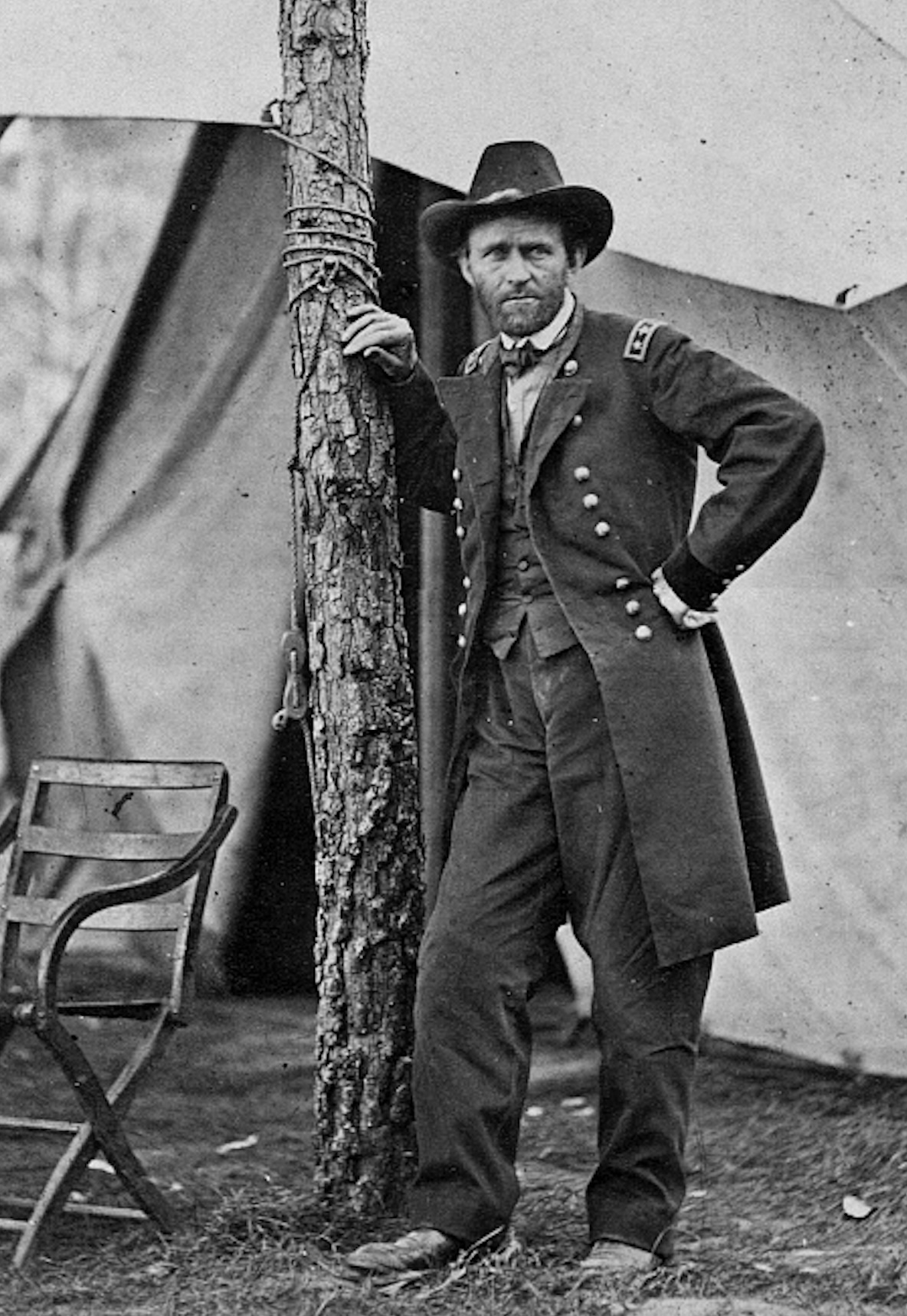
Grant in 1864
Brooks Simpson: Uh, there are stories that Grant had issues with alcohol that he, you know, may have drank from a barrel of tonic or something like that, that got him drunk. There’s one or two stories during the Mexican-American War where there’s questions about whether he could handle his liquor, etc. And, certainly, there are stories while he’s on the West coast in the 1850s, where alone, away from his wife and at the time two children, he takes to drink.
Okay. So let’s try to look at this with a little more discernment, if you will. Did Grant drink? Yes, he did. Did he get drunk? Yes, he did. Was he an alcoholic? Okay. That really depends upon one’s definition of what is alcohol addiction and alcohol abuse. And if you go and look at the literature, you will find that the literature on alcoholism and dependency and abuse is so diverse that it really depends which definition you want to apply to this situation. And I’ve seen several scholars writing on Grant, including Ron Chernow, say, “Well, I talked to somebody and they said he was an alcoholic.” That’s not how a responsible historian goes about their business in this regard. You don’t have Grant there, and part of the problem is you’re filtering accounts of Grant getting drunk and trying to discern what the truth is.
But there is a substratum, as it’s called, of the truth. So it really depends a lot on your definition of alcoholism and your definition of drunkard, which I think is really important. We’ve had these talks about Grant was a binge drinker. That doesn’t seem to be always held out, whole true, when you look at various stories. But does he have a relationship with alcohol? Yes. Does that relationship cause him trouble? Certainly. Not so much in his actual performance, but he gives his critics a tool with which to attempt to bludgeon him all the time. So he’s always going to have to deal with these rumors that he’s an alcoholic, that he’s a drunkard. And I think we need to distinguish between those two terms. Alcoholism, alcohol abuse, alcohol addiction, etc. You could be an alcoholic and not take a drink. You have a compunction to have a drink and you’re fighting it off, but there’s an addiction. And sometimes you can’t help yourself. Being a drunkard means you become drunk. A lot of people who are not alcoholics become drunk. They’ve had too much to drink sometime. They get careless. They lose control. That doesn’t mean they’re alcoholics. It does mean they have abused alcohol enough to become significantly impaired.
Those are two things in the 19th century. Attitudes towards alcohol were not that you shouldn’t drink, unless you were a temperance person, then any alcohol was bad. And that’s something Grant’s got to deal with in terms of critics. But there are other people who say, “If you’re a real man, you can hold your liquor.” Joe Hooker, for example, could hold his liquor. And Grant could not hold his liquor according to this stereotype, which meant, in turn, that he was labeled as this lazy, good-for-nothing drunkard. Now the truth is a lot more complicated than that. And it does sometimes require a careful look between the lines and looking at these various incidents that are reported and saying, “Okay, what do we really think happened here?” As opposed to “Why did we find out about it?” Which is usually someone writing a letter criticizing Grant and having an ax to grind against him and saying, “Well, by the way, he’s a drunkard.” And so, we really need to be a little more careful about why was Grant drinking, what impact did it have on him in actuality versus what impact did it have in terms of his reputation?
The other unfortunate thing about this is that most biographers of Grant see this as some sort of moral issue. And Ron Chernow sees it as a medical issue, and therefore he wants to talk about Grant’s mastery over his appetite. So they try to make this story into an insight into Grant’s character. Previous historians, and Bruce Catton, I think, would be the most prominent among them, were at pains to try to discredit every drinking story because they felt it tarnished the hero of their narrative. So you learn a lot about Grant’s biographers and about society at large—attitudes then, and attitudes now—by looking at how they deal with Grant and alcohol. Some seeing in reviving these stories a way to attack Grant. Not that many people really looking to try to understand Grant as opposed to come up with briefs for the defense or briefs for the prosecution on this issue.
Terry Johnston: Have you ever come across any concrete, clear evidence that Grant, how to say this, drank inappropriately, especially in the context of perhaps being drunk during a military campaign? You know, there are the infamous Civil War generals, the one that always pops to mind for me is one who’s a little bit more obscure, Henry Benham, who screwed up Union operations outside of Charleston in 1862 at the Battle of Secessionville, where he apparently was rip-roaring drunk as his men went into battle. We don’t have anything like that on Grant. But were the rumors by and large the product of Grant’s detractors, who had an ax to grind with him, or was there anything in these that had some basis in truth, concrete incidents?
Brooks Simpson: So let’s start by knocking down a favorite position offered by Grant’s defenders. And that is that if Grant drank, it’s when nothing was going on, so it didn’t mean anything. By definition, if you’re the commander of the army, there’s always something going on. So this idea that all of a sudden you decide to take a drink just to relax after, you know, things weren’t going on, that’s not true. And in fact, some of the most important drinking stories occur when things were going on. The most famous being the so-called Yazoo Bender of June 1863, where we’re told, well, Grant was sitting down and just relaxing and had some drinks. Well, first of all, Grant, when he goes on that steamboat ride on the Diligent, is checking a threat to his rear lines near Milliken’s Bend, site of a battle at the same time, where African-American troops have acquit themselves rather well. But he is checking for an attack upon his rear by Joe Johnston, who is in central Mississippi trying to figure out how to relieve the siege operations that Grant’s committing against Vicksburg.
Now, is Grant drunk on the battlefield? No. But is there a substratum to some of these stories? I would say yes. I would say that from my reading of the material, that Grant certainly got drunk in March 1863, even though it was for an evening, that there is enough talk and buzz and correspondence at that time suggests there was an incident. Exact details remain vague. I do think that in June 1863, he does overindulge, so to speak, but that’s because he’s urged to do so because he’s not feeling well. We have documented evidence about that, that Sherman’s medical director, a Dr. McMillan, actually said, “You’re feeling ill? Why don’t you take a drink?” Which is a common 19th century remedy. And what made this really explosive with Grant is that he suffered from migraine headaches. So to take alcohol when you have a migraine headache is disastrous in terms of its results, its impact on the person who’s drinking. And yet in the 19th century, okay, take a drink. So I think there’s something to that.
I think at the end of June 1864, when he is looking at the lines around Richmond and Petersburg, he clearly is out in a very hot, humid situation. He takes some drinks. I think he becomes nauseous. Now does that mean that he was drinking while he was on duty? Well, he is looking at the deployment of his troops, for example. So yes, I think there are incidents where Grant is drunk. I also think, frankly, when Grant is injured in New Orleans in September 1863, rather serious injuries, it turns out, all these talks about was Grant drinking at the time? I don’t think Grant was intoxicated, but I think Grant, when he mounted this horse, this rather undisciplined horse, and arrived in front of the troops and then the horse bolts when it hears a noise. I think that Grant was one of those people who probably take one drink too many. He was a little buzzed and probably was a little reckless at that time. Now, Grant was seriously injured as a result of this fall. One can say that had things turned out just a little differently, he might have been killed. And he’s hobbling around for several months. When he comes to Chattanooga in October 1863 he has to be helped on and off his horse. He’s still in pain. So, do these incidents have an impact upon his generalship? Yes. And they could have had worse impact on not only his generalship, but his health. So I do think there are moments where Grant does get intoxicated.
Now, what are the reasons for that intoxication? Well, we can go back and forth about that. But it’s interesting that on the evening before Appomattox, the surrender at Appomattox, Grant’s got a terrible migraine headache, which shows the stress of the campaign on him. And an aide says, “Hey, you know, you want to take a drink?” And Grant says, “No, I don’t. You know what might happen?” And Grant would say, “Sometimes I can drink a lot, no effect, sometimes one glass and I’m in trouble. I can’t afford that risk on April 8, 1865. I’ll deal with the headache.” And the headache only goes away, the migraine disappears, only when he hears that Lee has agreed to negotiate the surrender of his army. So I do think those historians who tried to deny that there’s any truth to these drinking stories or claim that, well, they really don’t make any difference because they weren’t at important moments. Those arguments to me are not supported by the record and rely upon dubious logic.
Terry Johnston: But at the same time, the rumors themselves far outpaced the severity of these incidents, is what you’re saying.
 Library of Congress
Grant, Julia, and one of their sons in a wartime photo taken at Grant’s headquarters at City Point, Virginia.
Brooks Simpson: Oh, yes. I mean, I think, for example, we have stories that Grant apparently was riding around the countryside during his Yazoo thing, the so-called Yazoo Bender. That Grant was out of commission and the like, no, I don’t buy that at all. And one of the stories that’s often told is that, well, Grant didn’t drink if Julia was around, that that brought stability to him. Again, I would set that one aside too. When Grant becomes president, the White House really begins to acquire quite a collection of wine and liquor and Julia’s at the White House. So if Julia thought that there was a problem here, she would not have allowed that alcohol, at all. And so, I don’t think that story holds up either. In other words, there are all these people trying to make excuses for his drinking. The fact is that he was a poor drunk. He was what some people would call a cheap date. Sometimes he could drink a glass and it showed, and sometimes he could drink three or four, and it didn’t show. Didn’t always choose the right times to do this. And sometimes he did it because he was in pain. And even on the west coast, he’s in pain. He has major problems with his teeth. And what did they say? “Take some booze. It’ll make you feel better.” And I’ve seen people like with wisdom teeth taken out. Then they say, “Okay, I’m going to take some alcohol just to sort of put myself out of commission,” you know, self-medication, for example.
The truth is much more mundane in terms of what happens. But did these tales come out of nowhere? No. In many cases were they exaggerations or were they fables based upon other reports? Yes. That’s pretty clear. And when you look at the stories, like the Yazoo Bender, you begin to see them unravel. Because other people say, “Well, that’s not what I remember. That’s not what I saw. I can’t support your story about this.” So there are lots of rumors at the time. There are rumors that John Rawlins was protecting him from liquor, which if actually true suggest that Rawlins did an awfully poor job of it, because Grant did drink when Rawlins was around.
So I think this is something where the story of Grant’s drinking is very illustrative of the world that he inhabited, but it’s also illustrative of the world we inhabit and how we view alcohol abuse, alcohol addiction, becoming intoxicated, and so-called becoming a drunkard who cannot handle their alcohol or who drinks to excess. That’s as much about us as it is about Grant. It was much more interesting in Grant’s time to say, you know what, the charge that he was a drunkard, that he couldn’t hold his alcohol, that he was out of control, that he was basically laid out, that’s a different story. That’s what the accusation was, that not only is he incompetent, but he’s drunk out of his senses, so he cannot function.
Terry Johnston: Before we close, I’ve got to ask: Did Lincoln really say that if he could find out where Grant gets his whiskey, he would send a barrel to every general in the Union army?
Brooks Simpson: We really don’t know what Lincoln said, because there’s another story that’s saying that, Lincoln said, “No, I didn’t really say that but I wish I had.” Lincoln understood after a while that the stories about Grant’s habitual intoxication, as it would be presented to him, were fairly much fabricated. But there’s a wonderful scene, D.W. Griffiths in 1930 did a film on Abraham Lincoln. It’s one of the first talkies. And we remember Griffiths because of Birth of a Nation. But in 1930 there is a film about Lincoln, which by the way celebrates Lincoln as a wonderful individual, and part of that is a showing of Lincoln and Grant meeting near the end of the war at City Point, and Grant sitting there looking at a glass, and then he looks at Lincoln, and Lincoln looks back at him and looks at the glass and looks back at Grant and nods that he can take the drink.
So I think what’s interesting about this is that it would be marvelous if I could find out enough about Grant’s drinking to get greater insight into who he was and what’s the character of the man. What’s the personality? What’s the psychological makeup? What were things that drove him in this direction? But we don’t have that. And so, in a sense, writing about Grant and alcohol today is not really all that different than people writing about Grant and alcohol in the 1860s and the 1870s and the first generation of memoirs and recollections about the American Civil War. Grant was aware of this charge. He had people address it, including a campaign biographer, the reporter Albert Richardson sort of touched on this. So he wasn’t silent about it. But he didn’t say very much about it and it was very private. So we only have a couple of accounts where Grant reflects on this issue. Mark Twain later on said that he was very upset that Grant didn’t address the drinking stories in the memoirs and said basically, you know, “Tell the whole story,” etc. “I wish he’d done that.” But Grant could be an intensely private man. And this is one of the cases in which he chose to keep his business to himself.
About the Guest
 Brooks D. Simpson is ASU Foundation Professor of History at Arizona State University and author of a number of books on the Civil War, including Let Us Have Peace: Ulysses S. Grant and the Politics of War and Reconstruction and Ulysses S. Grant: Triumph Over Adversity.
Additional Resources
Sponsored By